
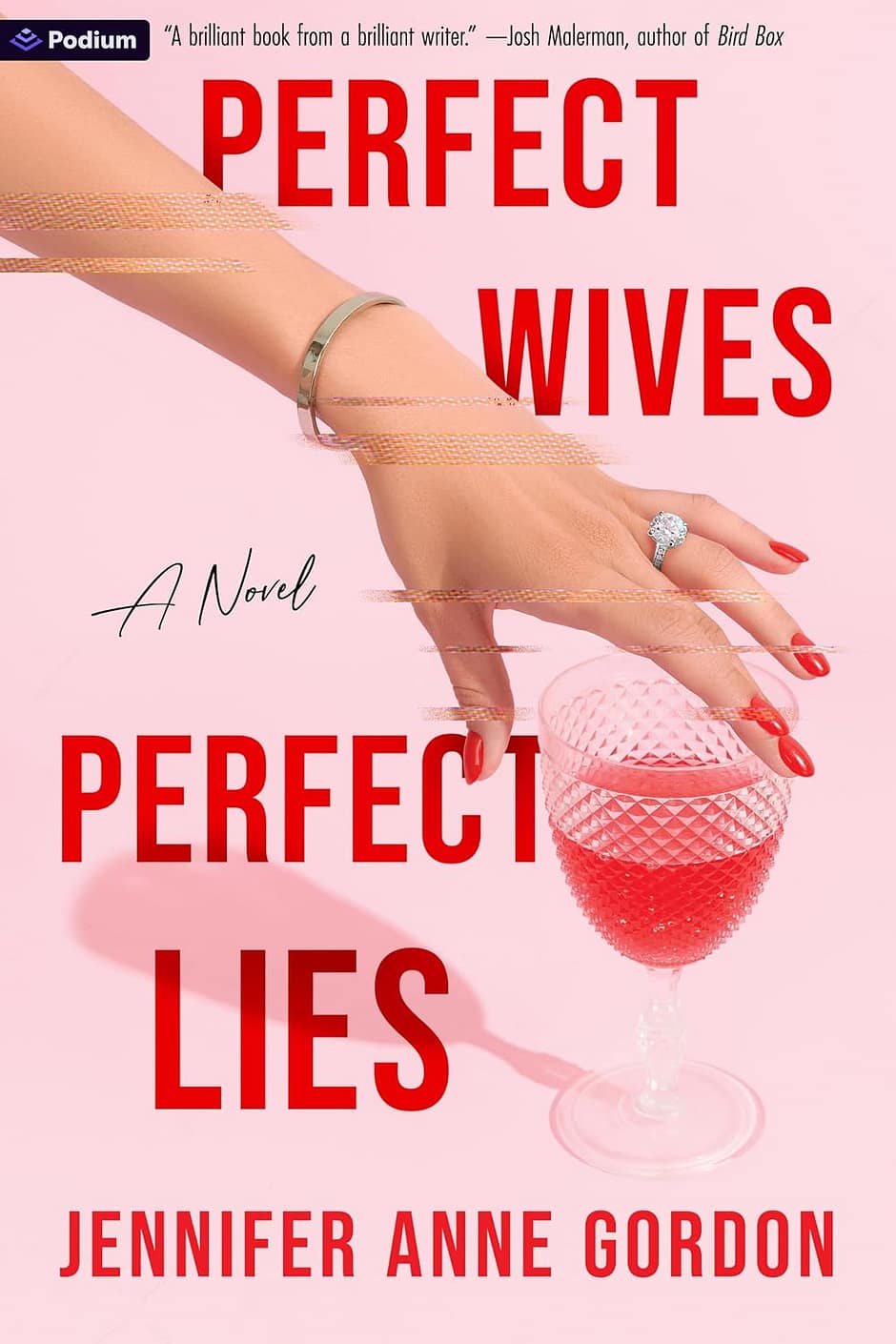
Book: Perfect Wives, Perfect Lies
Genre: Dark Psychological Fiction
Author: Jennifer Anne Gordon
Rating: 4.5/5
Reviewer: Stavyah Vatsarah
Jennifer Anne Gordon’s Perfect Wives, Perfect Lies contains an uncomfortable understanding about loneliness: sometimes pretending to have a better life feels easier than living the one you have. Rebecca “Becca” Gauthier, a forty-one-year-old social worker, is grieving the loss of her son, Gabe, and the end of her marriage. Her escape is Mommy Wine Time, a private Facebook group of women whose expensive habits and carefully arranged meals seem to have immunized them from the normal misery of life. Becca knows a lot of it is ludicrous. She sees. She can’t help it. Gordon turns this innocuous obsession into a dark, razor-sharp study of grief and the dangerous pleasure of becoming someone else.
A Life Behind the Curtain
Becca is not an easy character to like, which is what makes her interesting. She is pleasant at work, fatigued at home, preoccupied with money, and has the ability to make fun of nearly everyone around her, including herself. Early on, she wonders how forty-four women can create “so much beautiful nothing”—a wonderfully sharp description of the online world she secretly loves. The contradiction is huge: Becca hates the privilege on display but covets the security it seems to promise. Her sarcasm is funny until the pain that lies underneath seems so apparent.
Gordon finds that pain does not make Becca a helpless victim. Gabe’s death is always there, in ordinary moments, in a picture on her phone, in words that unexpectedly conjure memories of drowning. Becca’s a social worker who can handle the tough cases but can’t get through her own evenings without wine and the comforting fiction of her online identity. She admits that “Being Becca is hard,” and it is painfully simple. It explains why playing someone else has become more than entertainment.
Women Who Made the Pictures Perfect
Mommy Wine Time is one of the novel’s strongest creations because Gordon knows the particular intimacy of online communities. Its members trade remarks about food, beauty, marriage, and domestic frustrations, often cloaking cruelty in humor. Perfectly photographed breakfasts become a competition, and apparently innocent conversations reveal class prejudice and resentment. Becca belongs to this theater, in the person of Lucy Westenra, the identity she has fashioned for herself. The gag is that she sees through everyone else’s performance but becomes more and more reliant on her own.
Her friendship with Lynn is a revealing contrast. Both women are social workers, know what professional burnout is, and have a history before Becca’s online existence. Their conversations are deliciously messy, full of jokes and annoyance and affection and uncomfortable truths. Lynn realizes that Mommy Wine Time is not just a distraction but a desire to live a different life. The distinction between being surrounded by people and being known is glaringly obvious when Becca says, “The group doesn’t know my real circumstances.”
ALSO READ | The Making of a Fae Queen
When Friendship Turns Into Something Else
As Becca’s online relationships start to take on emotional significance, the book becomes darker and darker, her real life not quite matching up. Gordon is so effective at showing how addictive attention can be, especially when you’ve been invisible for years. An unexpected sign of interest can turn an otherwise miserable evening. Becca doesn’t want just admiration; she wants to feel like she’s important. That need makes her sympathetic even as her choices grow more and more indefensible.
The writing is deliberately restless, flitting between dark humor, grief, social commentary, and Becca’s anxious inner monologue. References to television, horror films, fast food, and social media give her narration a familiar contemporary voice. The endless digressions might exhaust some readers, but they also expose a mind desperate to evade silence. Gordon usually notices mundane details. Even a chocolate shake or an unopened student loan bill can be a reminder of something Becca is not ready to face.
The Cost of Make-Believe
What makes Perfect Wives, Perfect Lies compelling is its unwillingness to present loneliness as something easily fixed by friendship or self-awareness. Becca knows her online life is unhealthy, but knowing doesn’t make leaving it any easier. Gordon also doesn’t make the supposed perfect women into objects of ridicule. Underneath the privilege and the performance lie familiar insecurities and desires for control. The social satire of the novel is at its best in its demonstration of how easily people confuse appearances with happiness.
Ultimately, Perfect Wives, Perfect Lies is a disturbing portrait of what happens when escape becomes more real than reality. Gordon writes about grief without making it respectable and about female friendship without pretending women are always kind to each other. Her smartest observation is that deception is not always motivated by a desire to hurt someone. It may begin with a desire to be loved or even just noticed. And occasionally, the best lie we tell ourselves is that we are being truthful.
DO READ | The Jungle Comes Alive
ENGAGE WITH LH | Click on the cover image of the book Perfect Wives, Perfect Lies and buy yourself a copy right off the bat!